
How to Use Manuka Honey

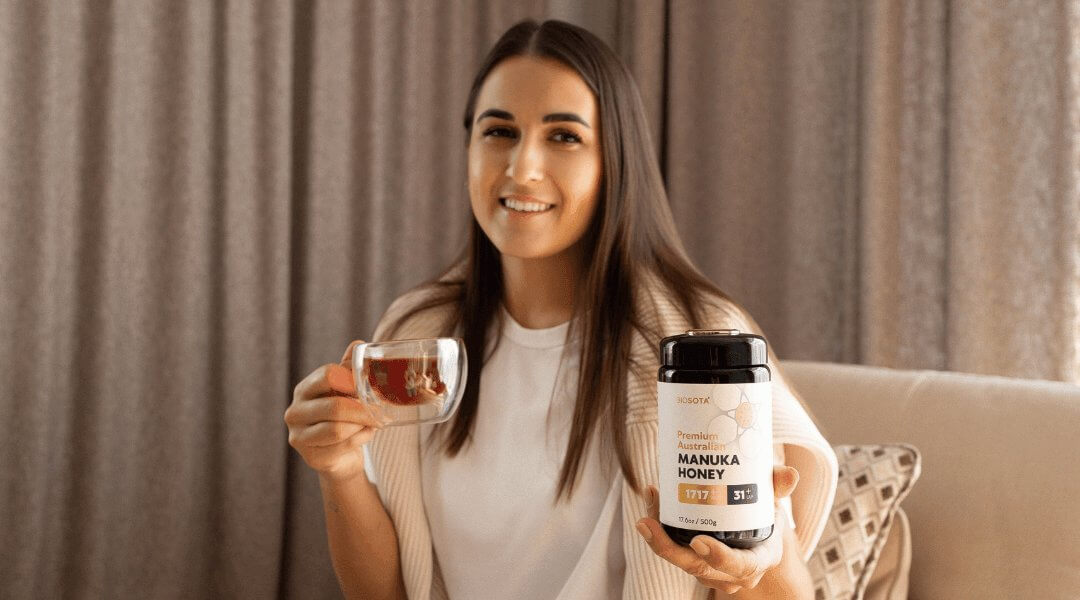
Woman showing how to use Manuka honey in a cup of tea

MEDICINAL MANUKA HONEY GUIDE

Get the best results from your Manuka honey

It comes down to three things: choosing the right MGO strength, using it the right way, and taking it daily, consistently, over time. Daily use is what brings the best results.

TAKE THE FREE QUIZSEE THE STRENGTH GUIDE

AT A GLANCE

  • Suggested use for a daily ritual: 1 to 2 teaspoons a day of MGO 550+ to 1200+, straight from the spoon, in warm or cold drinks or added to food. Daily, consistent use over time brings the best results.
  • Save the higher strengths, MGO 1200+ to 2200+, for targeted support such as wounds and burns.
  • Suggested use for a cough: 1 to 2 teaspoons a day, then 1 teaspoon as symptoms improve.
  • Let hot drinks cool until warm before stirring it in.
  • On skin, apply a generous layer and cover with a sterile dressing.
  • To preserve MGO bioactivity, store at room temperature below 20°C (68°F) and avoid heat exposure. Refrigeration is optional for long-term storage. Crystallisation is natural and doesn’t impact quality or efficacy. To decrystallise, place the sealed jar in warm water. Short-term exposure to higher temperatures, such as during shipping, does not affect the honey.
  • Not suitable for babies under 12 months.

Three things that make the difference

  1. Choose the right strength

    MGO is the natural compound behind Manuka honey's antibacterial activity. The higher the number, the stronger the activity in laboratory tests. MGO 550+ to 1200+ suits daily use; higher grades suit targeted support.

    What is MGO?

  2. Use it the right way

    Straight from the jar, in warm (not hot) drinks, in food, or on the skin. How you take it shapes the result as much as the strength does.

  3. Use it every day

    The best results come from daily, consistent use over time. Make 1 to 2 teaspoons part of your daily ritual.

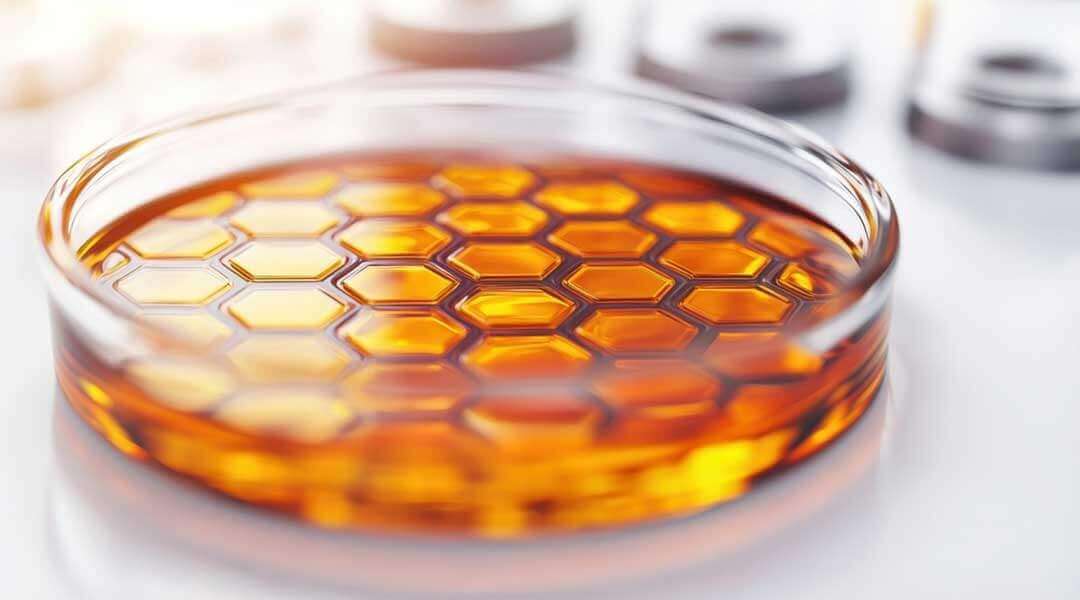
Manuka honey in a glass dish, its surface patterned like honeycomb

How to use it, by health goal

Daily use of a low to mid strength, such as MGO 1200+, is the foundation. Find your goal below for how to take it, and when a higher strength helps.

MGO 550+ TO 1200+

Daily ritual and immune support

Manuka honey is naturally rich in antioxidants, enzymes and bioactive compounds, including MGO. Taken every day, it is a simple part of a daily ritual, and daily, consistent use over time brings the best results.
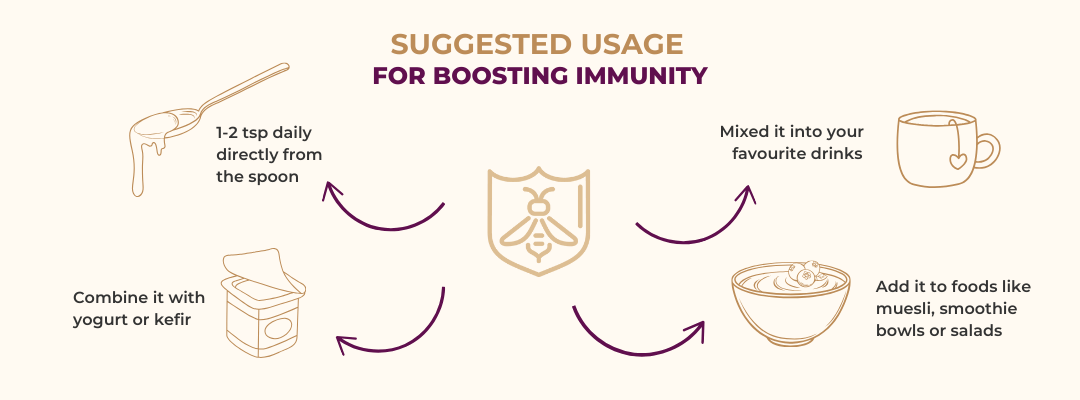
How to use Manuka honey to boost immunity

Suggested use

  • Straight from the spoon: 1 to 2 teaspoons a day, MGO 550+ to 1200+. New to Manuka honey? MGO 550+ is a gentle start.
  • In drinks or food: stir into a warm or cold drink, blend into a smoothie, add to food or spoon over muesli. Let hot drinks cool until warm before stirring it in.
The research
  • In a laboratory study on human blood samples, Manuka honey reduced oxidative DNA damage caused by hydrogen peroxide. Read the study
  • A 30-day study in middle-aged rats found Manuka honey protected against oxidative damage. Read the study
  • In a small trial, 20 healthy adults ate 20 g of Manuka honey (about 1 tablespoon) a day for 4 weeks. It was well tolerated and did not change IgE or gut bacteria profiles. Read the study

Best strengths: MGO 550+ to 1200+
Shop MGO 550+Shop MGO 880+Shop MGO 1200+

MGO 550+ TO 1200+

Colds, coughs, sore throat and flu

In studies of honey in general, a bedtime dose of honey eased night-time cough in children over 12 months.

How to use Manuka honey for coughs, colds, flu and sore throats

Suggested use

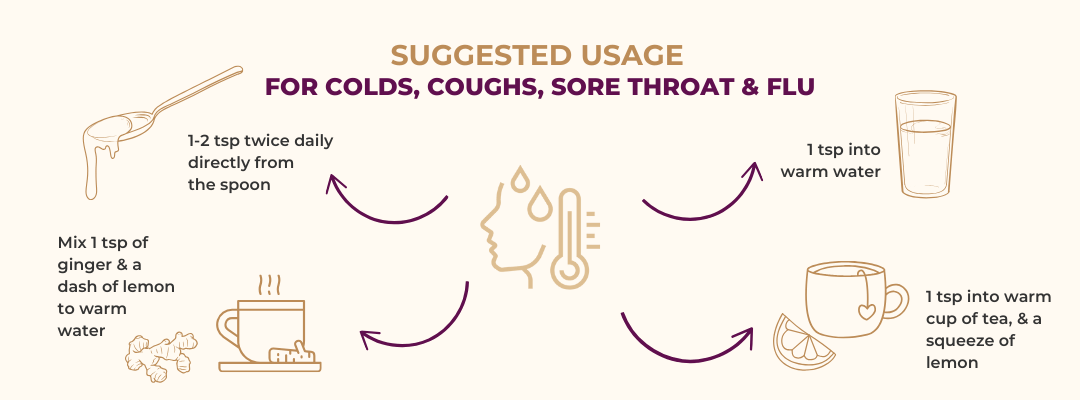
  • Colds and flu: 1 to 2 teaspoons a day, then 1 teaspoon as symptoms improve, straight from the spoon or stirred into warm lemon and ginger tea.
  • Sore throats: 1 to 2 teaspoons a day, then 1 teaspoon as symptoms improve, straight from the spoon to coat the throat, or stirred into warm lemon and ginger tea.
  • Coughs: 1 to 2 teaspoons a day, then 1 teaspoon as symptoms improve. For night-time coughing, 1 teaspoon before bed.
  • In warm water or tea: 1 teaspoon in warm water with a squeeze of fresh lemon. Let it cool until warm before stirring it in.

Keep taking your daily amount once you feel better: daily, consistent use over time brings the best results.

Honey should not be given to babies under 12 months because of the risk of infant botulism.

The research
  • A 2021 review of 14 studies in BMJ Evidence-Based Medicine found honey beat usual care for how often and how badly people coughed, and for upper respiratory symptoms overall. Read the study
  • A 2023 review in the European Journal of Pediatrics found honey may work better than over-the-counter cough medicines for children over 12 months. Read the study
  • A 2018 Cochrane review of 6 trials in 899 children aged 12 months to 18 years found honey probably reduces cough frequency better than no treatment or placebo, and may have a similar effect to dextromethorphan. This was honey in general. Read the review
  • A 2007 trial of 105 children aged 2 to 18 found a single bedtime dose of buckwheat honey was better than no treatment for cough frequency, and not significantly different from dextromethorphan. Read the study

Best strengths: MGO 550+ to 1200+
Shop MGO 550+Shop MGO 880+Shop MGO 1200+

MGO 550+ TO 1200+

Gut health

Gut health is an emerging area for Manuka honey. In laboratory studies it encouraged some beneficial gut bacteria and inhibited some harmful ones, including Helicobacter pylori (H. pylori).

Manuka honey suggested usage for gut health

Suggested use

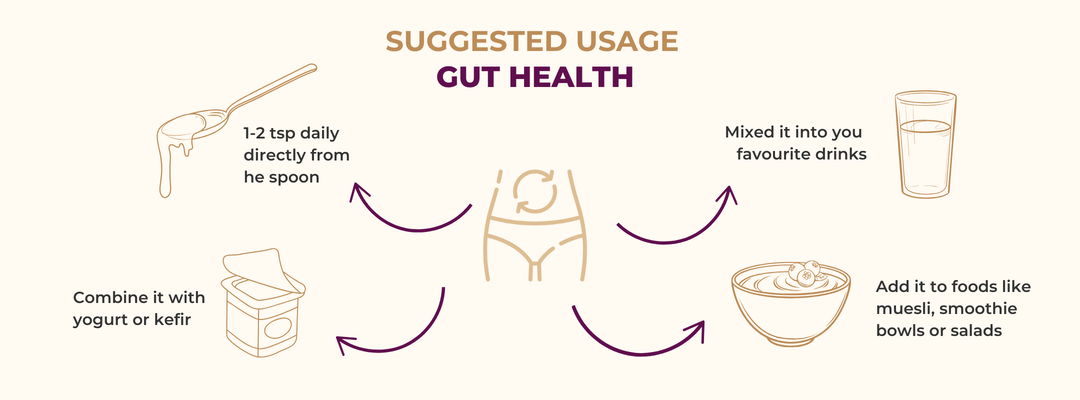
  • Straight from the spoon or in drinks: 1 to 2 teaspoons a day, preferably before meals.
  • Add to food: stir through muesli, blend into a smoothie or swirl through an acai bowl. It also works in protein balls and no-bake slices.
  • Pair with probiotics: take it with yoghurt or kefir to combine its prebiotic properties with live cultures.

Suggested strengths for digestive support: MGO 550+ to 1200+.

Keep taking your daily amount: daily, consistent use over time brings the best results.

The research
  • In a laboratory study in the Journal of the Royal Society of Medicine, a 5% Manuka honey solution inhibited every H. pylori isolate tested. Read the study
  • A 2016 laboratory study in Archives of Medical Research found honey blocked H. pylori from switching on inflammation pathways (NF-κB and AP-1) in stomach lining cells. Read the study
  • In a small trial, 20 healthy adults ate 20 g of Manuka honey a day for 4 weeks. It was well tolerated and did not significantly change the gut bacteria groups tested. Read the study

Best strengths: MGO 550+ to 1200+
Shop MGO 550+Shop MGO 880+Shop MGO 1200+

MGO 1200+ TO 2200+

Skin, minor wounds and burns

For targeted support on the skin, a higher strength is best, because the honey needs to work right where it is applied. It also moisturises and forms a protective barrier.

How to use Manuka honey for skin infections, burns and wounds

Suggested use for skin

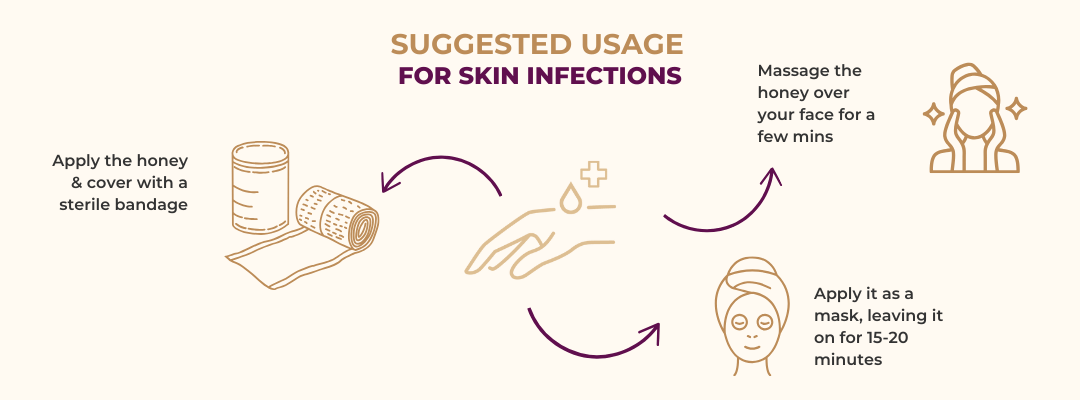
  • As a cleanser: massage gently over your face for a few minutes, then rinse and pat dry.
  • As a mask: leave on for 15 to 20 minutes, then rinse with water.

For eczema, studies of honey on the skin are small and the results are mixed.

Suggested use for minor wounds, cuts and burns

  1. Clean the area thoroughly.
  2. Apply a generous layer of Manuka honey.
  3. Cover with a sterile bandage or dressing.
  4. Change the dressing when it is saturated, or as needed, until healing progresses.

For serious wounds or infections that persist, see a healthcare professional before use.

The research

The wound and burn studies below are on honey dressings.

  • A 2024 meta-analysis in Nutrients found honey dressings sped up healing and improved healing rates compared with conventional treatments. Read the study
  • A 2024 paper in AIMS Microbiology looked at Manuka honey in wound care formulations. Read the study
  • A 2020 study in Scientific Reports showed activity against MRSA, a bacterium that resists many antibiotics. Read the study
  • A small 2017 study applied Manuka honey overnight for 7 days to one of two matched atopic dermatitis lesions in adults and reported improvement in 14 patients. Read the study
  • A 2014 pilot trial in 15 adults found medical-grade kanuka honey no better than aqueous cream for eczema. This was kanuka honey, not Manuka. Read the study
  • A Cochrane review of honey as a topical treatment for wounds (26 trials, 3,011 participants, honey in general) found high quality evidence that honey dressings heal partial thickness burns about 4.7 days faster than conventional dressings. Read the review

Best strengths: MGO 1200+ to 2200+

Shop MGO 1200+Shop MGO 1717+Shop MGO 2200+

MGO 1200+ TO 2200+

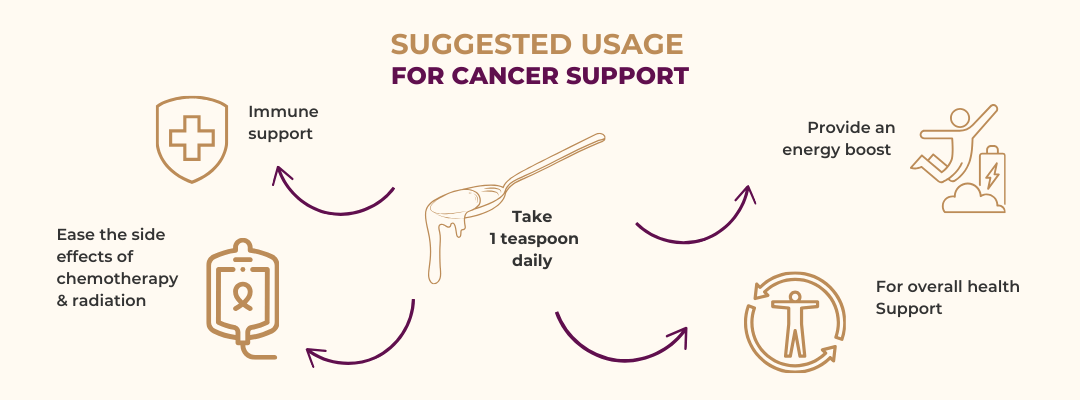
Support during cancer care

Early research suggests Manuka honey may offer complementary support during cancer care, thanks to its antioxidant and anti-inflammatory properties. These findings come from laboratory and animal studies, so it should only ever be a supportive food alongside a care plan from your healthcare team.

How to use Manuka honey for cancer support

Suggested use

1 to 2 teaspoons a day during treatment, for:

  • Immune and antioxidant support: may help reduce oxidative stress and inflammation.
  • Treatment side effects: in studies of honey, honey used in the mouth during head and neck radiotherapy delayed mucositis and reduced weight loss and treatment interruptions.
  • Energy and digestion: may help maintain natural energy and support digestion.

Always check with your treating healthcare professional before adding anything to your routine during treatment.

The research
  • A 2021 review in Nutrients found honey and its flavonoids had immune-stimulating and anti-inflammatory effects in preclinical studies, and called for more research. Read the study
  • A 2024 preliminary UCLA study found Manuka honey reduced tumour growth by 84% in mouse models of ER-positive breast cancer. Read the UCLA release
  • A 2016 meta-analysis of 8 studies found honey used during head and neck radiotherapy delayed the time to mucositis and reduced weight loss and treatment interruptions, but did not lower peak mucositis severity. Read the study
  • A 2019 network meta-analysis of 17 trials in 1,265 patients found honey improved outcomes for moderate to severe mucositis during chemotherapy or radiotherapy. Read the study

Best strengths: MGO 1200+ to 2200+

Shop MGO 1200+Shop MGO 1717+Shop MGO 2200+

What our customers say

“Amazing honey, rich taste – wonderful to sweeten tea or hot cereal. Tastes healthy and fresh. I’m Hooked.”
Cynthia J. · on Certified Organic MGO 550+
“Thank you for making such a valuable, natural product available! I use this Manuka honey for medicinal applications, such as mixing it into my herbal salves, aromatherapy-based topical creams and in delectable chai lattes during the bitter-cold months in Melbourne.”
Francis · on MGO 1717+
Read more customer reviews
Biosota Manuka honey MGO 1717+ jar with honey dripping from a wooden spoon, beside a cup of lemon tea

Let us help you find your strength

Answer a few quick questions and we will match you to an MGO strength.

TAKE THE FREE QUIZ

Manuka honey MGO strength guide

Not sure which MGO rating is right for you? Use this as a starting point. For everyday use, we recommend MGO 550+ to 1200+.

Suggested useStrength
Daily ritual and immune maintenance MGO 550+ to 1200+
Cold and flu season support MGO 550+ to 1200+
Moderate cold, cough or sore throat MGO 550+ to 1200+
Everyday digestive support MGO 550+ to 1200+
Gut health and H. pylori support MGO 550+ to 1200+
Skin care MGO 1200+ to 2200+
Minor wounds and skin infections MGO 1200+ to 2200+
Wellness support during cancer treatment MGO 1200+ to 2200+
Deep wounds, ulcers and burns MGO 1200+ to 2200+

Statements made have not been evaluated by the TGA (Australian Therapeutic Goods Administration) or FDA (U.S. Food & Drug Administration). Products sold are not intended to diagnose, treat, cure, or prevent any disease. Manuka honey is not intended to be a substitute for other medicines or advice and is best used in conjunction with any existing treatment plans. Please consult your healthcare professional before beginning any treatment. Note that as bioactivity levels are destroyed when exposed to heat, Biosota Organics Manuka honey is not heat-treated, pasteurised or sterilised.

Questions

People take Manuka honey every day as part of a wellness routine, and use it for targeted support: colds, coughs and sore throats, gut health, skin, and minor wounds and burns. What sets it apart is MGO, the natural compound behind its antimicrobial activity. See how to use it, by health goal.

Our suggested use for a daily ritual is 1 to 2 teaspoons a day of MGO 550+ to 1200+, straight from the spoon, in warm or cold drinks or added to food. Daily, consistent use over time brings the best results. For a cold or cough, our suggested use is 1 to 2 teaspoons a day, then 1 teaspoon as symptoms improve.

Can you have too much? Manuka honey contains natural sugars, so if you are managing your blood glucose, factor it into your diet and check with your healthcare professional.

  1. Clean the area thoroughly.
  2. Apply a generous layer of Manuka honey.
  3. Cover with a sterile bandage or dressing.
  4. Leave it overnight and change the dressing when it is saturated, or as needed, until healing progresses.

Use MGO 1200+ for minor cuts and skin infections, and MGO 1717+ or higher for deeper wounds, ulcers and burns. For serious wounds, or a wound that is not improving, see a healthcare professional.

As a cleanser, gently massage a little over your face for a few minutes, then rinse and pat dry. As a mask, leave it on for 15 to 20 minutes, then rinse with water. MGO 1200+ is our recommended strength for skin.

Honey must not be given to babies under 12 months, because of the risk of infant botulism. It contains natural sugars, so factor it in if you are managing your blood glucose. If you are allergic to honey or bee products, avoid it.

Yes. Let the tea cool until it is warm rather than hot, then stir in 1 teaspoon. The same goes for cooking: add it once the heat is off.

No, refrigeration is optional for long-term storage. To preserve MGO bioactivity, store at room temperature below 20°C (68°F) and avoid heat exposure. Crystallisation is natural and doesn’t impact quality or efficacy. To decrystallise, place the sealed jar in warm water. Short-term exposure to higher temperatures, such as during shipping, does not affect the honey. Don't leave a metal spoon in the jar, as long contact with metal can affect the honey over time.

Manuka honey comes from the nectar of Leptospermum (Manuka) trees and naturally contains MGO. Ordinary honey is not rated for MGO. To check quality, look for an MGO rating that is independently lab tested and, for Australian Manuka honey, the AMHA Authentic mark. Every batch of Biosota Manuka honey is independently lab tested, and our honey is certified AMHA Authentic: see our Certifications page.

  1. al Somal N, et al. Susceptibility of Helicobacter pylori to the antibacterial activity of Manuka honey. J R Soc Med, 1994. PubMed
  2. Abdel-Latif MM, Abouzied MM. Molecular mechanisms of natural honey against H. pylori infection. Arch Med Res, 2016. PubMed
  3. Abuelgasim H, et al. Effectiveness of honey for symptomatic relief in upper respiratory tract infections. BMJ Evid Based Med, 2021. DOI
  4. Kuitunen I, Renko M. Honey for acute cough in children: a systematic review. Eur J Pediatr, 2023. PubMed
  5. Tang Y, et al. Efficacy and safety of honey dressings in the management of chronic wounds. Nutrients, 2024. PubMed
  6. Dahiya D, et al. Bioactivities of Manuka and regional varieties of honey for infection control related to wound healing. AIMS Microbiol, 2024. PubMed
  7. Frydman GH, et al. Manuka honey microneedles for enhanced wound healing and MRSA surgical site infection. Sci Rep, 2020. PubMed
  8. Masad RJ, et al. The immunomodulatory effects of honey and associated flavonoids in cancer. Nutrients, 2021. DOI
  9. Heady D. Preliminary study shows potential of Manuka honey as a nutraceutical for breast cancer. UCLA Health, 2024. UCLA Health
  10. Mavric E, et al. Identification and quantification of methylglyoxal as the dominant antibacterial constituent of Manuka (Leptospermum scoparium) honeys from New Zealand. Mol Nutr Food Res, 2008 (laboratory study). PubMed
  11. Oduwole O, et al. Honey for acute cough in children. Cochrane Database Syst Rev, 2018 (honey in general, not Manuka). PubMed
  12. Paul IM, et al. Effect of honey, dextromethorphan, and no treatment on nocturnal cough and sleep quality for coughing children and their parents. Arch Pediatr Adolesc Med, 2007 (buckwheat honey, not Manuka). PubMed
  13. Jull AB, et al. Honey as a topical treatment for wounds. Cochrane Database Syst Rev, 2015 (honey in general, mostly dressings). PubMed
  14. Fingleton J, et al. A randomised controlled trial of topical Kanuka honey for the treatment of eczema. JRSM Open, 2014 (kanuka honey, not Manuka). PubMed
  15. Alangari AA, et al. Honey is potentially effective in the treatment of atopic dermatitis: clinical and mechanistic studies. Immun Inflamm Dis, 2017 (Manuka honey, small study). PubMed
  16. Co JL, et al. Effectiveness of honey on radiation-induced oral mucositis, time to mucositis, weight loss, and treatment interruptions among patients with head and neck malignancies: a systematic review and meta-analysis. Head Neck, 2016 (honey in general). PubMed
  17. Yang C, et al. Topical application of honey in the management of chemo/radiotherapy-induced oral mucositis: a systematic review and network meta-analysis. Int J Nurs Stud, 2019 (honey in general). PubMed
  18. Cokcetin NN, et al. The antibacterial activity of Australian Leptospermum honey correlates with methylglyoxal levels. PLoS One, 2016 (laboratory study). PubMed
  19. Wallace A, Eady S, et al. Br J Nutr, 2010 (Manuka honey, 20 healthy adults, 4 weeks). PubMed
  20. Živković L, et al. Manuka honey attenuates oxidative damage induced by H2O2 in human whole blood in vitro. Food Chem Toxicol, 2018 (laboratory study). PubMed
  21. Jubri Z, et al. Manuka honey protects middle-aged rats from oxidative damage. Clinics (Sao Paulo), 2013 (animal study). PubMed
  22. Centers for Disease Control and Prevention. Botulism prevention: infant botulism (do not feed honey to a child younger than 1 year). CDC

Find the right Manuka for you

TAKE THE FREE QUIZShop all Manuka honey